The story behind this piece
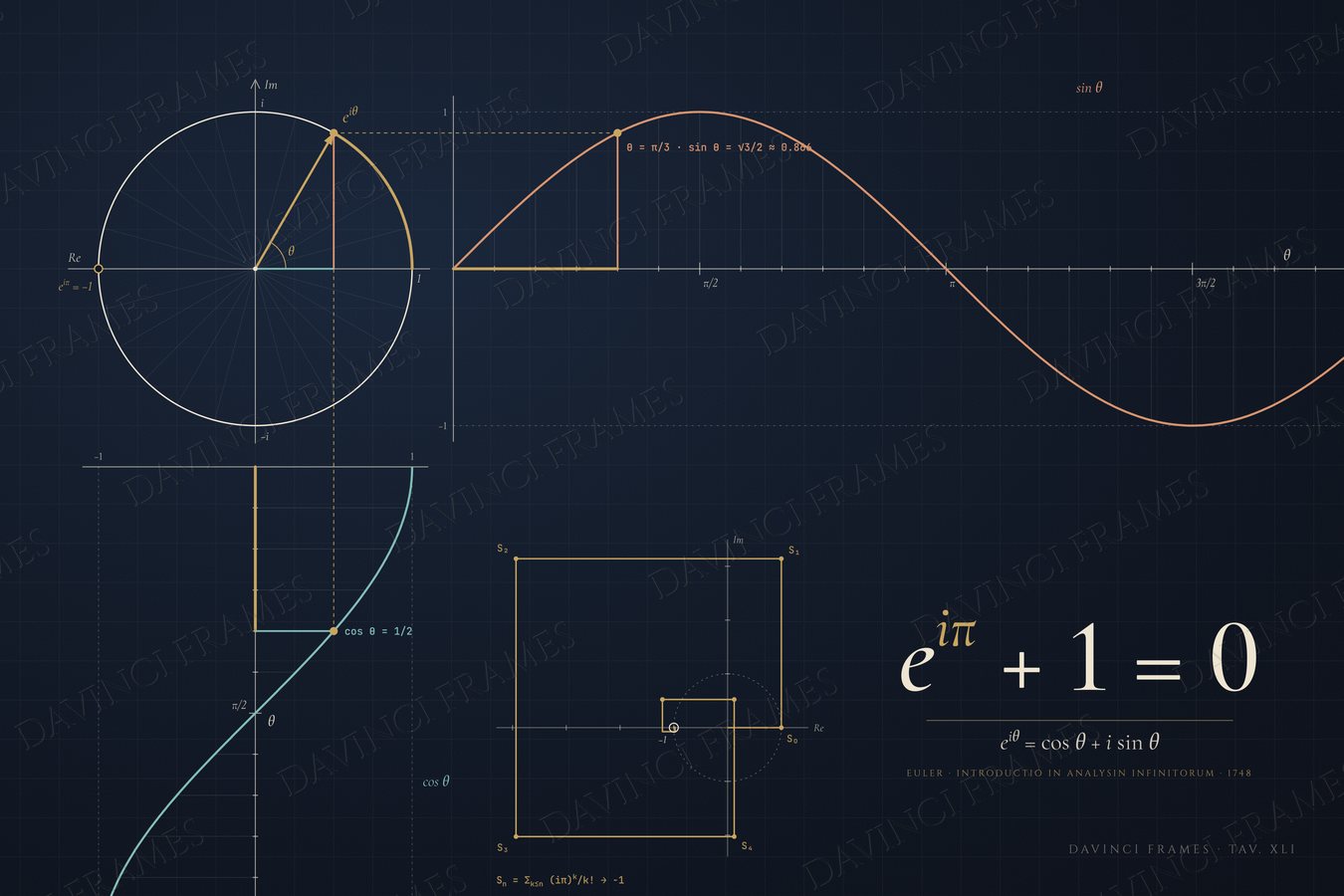
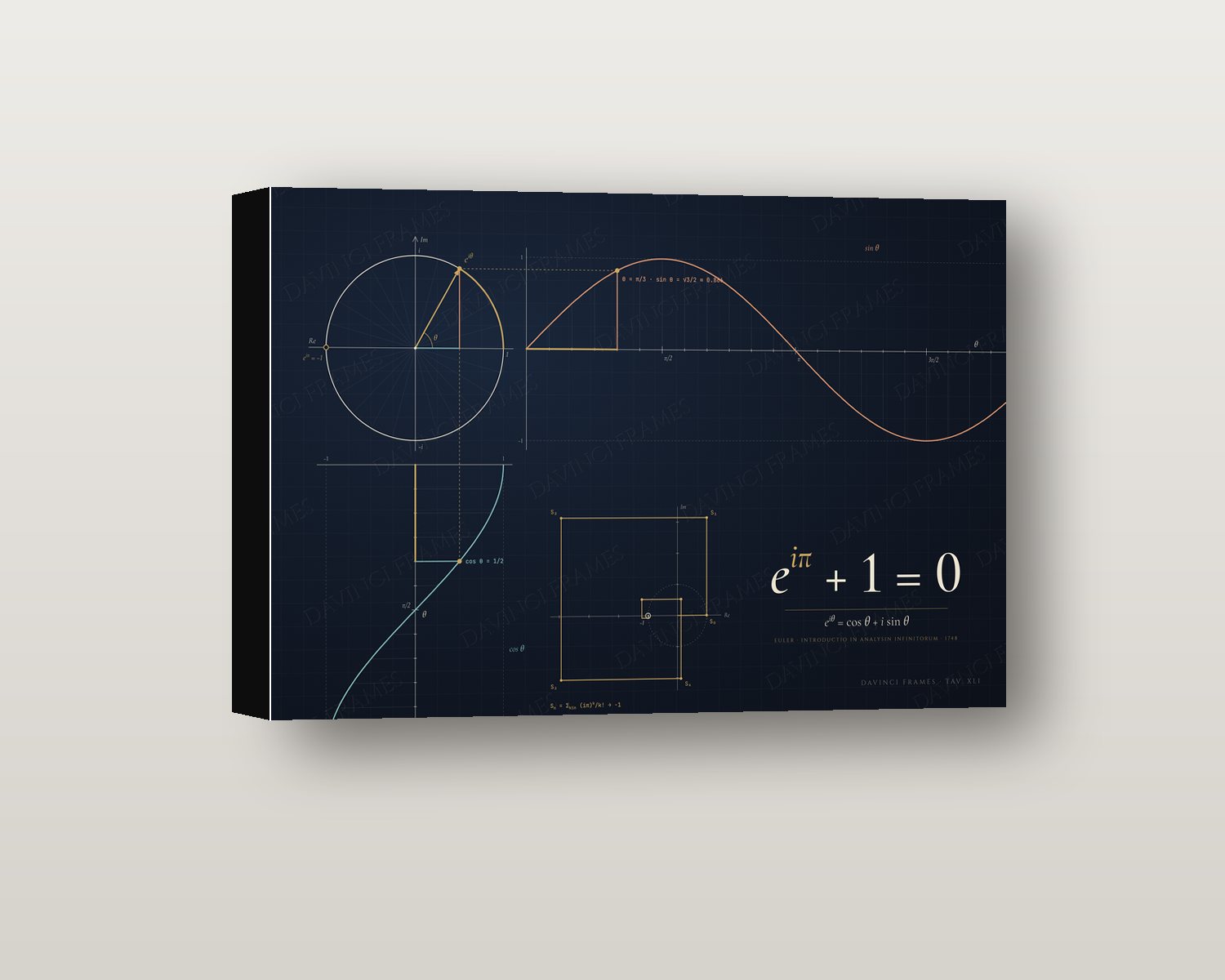
Euler's formula, e^iθ = cos θ + i sin θ, set out in his Introductio in analysin infinitorum of 1748, binds the exponential to the circle. Here the phasor e^iθ turns on the unit circle of the complex plane, stopped at θ = π/3, where cos θ = 1/2 and sin θ = √3/2. Its two shadows unroll to exact scale: one radius equals one radian on each θ axis, so the gold arc and the gold segments are precisely the same length, and the ticks at π/2, π, 3π/2 fall where they must. Beside it, the partial sums of Σ (iπ)ᵏ/k! spiral in to −1 — which is why e^iπ + 1 = 0. Euler gave us the formula; this famous form of the identity was written down later.